
Loading Game...
Play Lord of the ocean and win!
Home → Demo
Lord of the Ocean Demo
What the Lord of the Ocean demo gives you
The Lord of the Ocean slot by Novomatic studio offers a theoretical RTP of 95.10% during its free play mode, establishing a house edge of 4.90% that remains constant across all sessions. This percentage indicates the long-term return over hundreds of thousands of spins, meaning players should expect gradual variance rather than immediate payouts in short demo trials. Consequently, users can test the high volatility mechanics without risking actual funds, allowing them to observe how the expanding wild and free spins features trigger during extended play.
The maximum win cap of 5,000x applies equally to both the demo environment and real money gameplay, providing a clear target for strategic betting within the five-reel structure. This ceiling limits potential gains regardless of bet size, so even hitting the top prize requires landing specific symbol combinations on the ten active paylines defined by the game rules. Players using the Greentube digital division interface can thus gauge risk tolerance by attempting to reach this multiplier while observing how quickly their virtual balance depletes or grows.
Unlike Alles Spitze by Merkur which caps wins at 500x with a lower RTP of 90.85%, Lord of the Ocean provides significantly higher upside potential despite similar high volatility characteristics. The broader range between these two titles highlights how Novomatic’s design favors larger, less frequent payouts compared to Gauselmann brand offerings that prioritize steadier but smaller returns. Analysts note this distinction helps players choose games based on whether they prefer chasing massive multipliers or maintaining longer session durations with reduced bankroll swings.
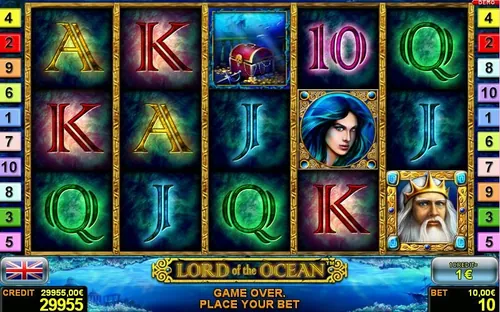
Starting the demo without registration
Accessing the Lord of the Ocean demo requires no personal data submission or account creation, allowing instant entry into the browser-based version developed by Novomatic’s Greentube division. This frictionless start contrasts sharply with real money modes where KYC verification and bonus terms like the 300% welcome bonus up to €2,000 must be fulfilled before withdrawal. Users benefit from immediate access to the full 5x3 grid and ten paylines, enabling them to familiarize themselves with the Ancient Greek theme and Poseidon mechanics without administrative delays.
The absence of registration barriers means players can adjust bets ranging from 0.10 to 100 instantly, testing various stake levels against the high volatility profile without financial commitment. This flexibility allows thorough examination of how the Gamble feature impacts total returns after winning combinations, as users can reset parameters freely between spins. Such unrestricted experimentation helps identify optimal betting strategies before transitioning to real money play, where the same bet range applies but actual currency is at risk.
Browser compatibility ensures smooth operation across devices, mirroring the performance seen in Alles Spitze by Merkur which also runs efficiently without downloads due to HTML5 technology standards. Both titles leverage modern web protocols to deliver consistent frame rates and responsive controls, eliminating lag that might disrupt the timing of free spin triggers or expanding wild activations. This technical parity underscores why independent analysts recommend testing demos thoroughly before depositing funds into accounts requiring wagering requirements tied to initial bonuses.
Demo balance and bet sizes
The virtual balance provided in the Lord of the Ocean demo resets automatically upon page refresh, ensuring every new session begins with identical starting conditions set by Novomatic’s software architecture. This mechanism prevents carryover effects from previous attempts, allowing precise measurement of how different bet sizes impact longevity against the 95.10% RTP baseline over extended play periods. Players can systematically vary stakes between 0.10 and 100 to observe how high volatility manifests differently at each level, noting whether lower bets extend session duration significantly compared to maximum wagers.
Betting at the minimum 0.10 per spin reduces exposure to rapid bankroll depletion, making it easier to experience the full cycle of base game spins leading to free spins or Gamble features. Conversely, maxing out at 100 accelerates result realization, helping users quickly assess if the 5,000x max win probability justifies the increased risk inherent in high volatility slots. These distinct approaches allow comparative analysis of risk versus reward dynamics, informing decisions about appropriate stake selection when transitioning to real money environments with fixed wagering constraints.
Unlike Alles Spitze by Merkur which mandates specific bet structures tied to its 90.85% RTP model, Lord of the Ocean offers flexible sizing across its ten paylines without altering underlying mathematical expectations. This adaptability enables players to tailor their approach based on personal tolerance for variance, knowing the theoretical return remains stable regardless of individual spin costs. Analysts suggest utilizing this freedom to map out preferred betting patterns, ensuring alignment between demo experiences and future real money strategies under identical regulatory frameworks.
What carries over to real money
The core gameplay mechanics of Lord of the Ocean remain unchanged when switching from demo to real money mode, preserving the 95.10% RTP and high volatility settings established by Novomatic. However, the absence of a cash-out button confirms this is strictly a slot title, not a crash game, requiring players to accept final outcomes only after completing all reel spins. This structural consistency ensures that strategies tested during free play translate directly to paid sessions, though actual monetary results will reflect true statistical probabilities rather than simulated balances.
Real money play introduces the 300% welcome bonus up to €2,000 plus 100 free spins, creating additional wagering requirements that do not exist in the unrestricted demo environment. These promotional terms mandate specific turnover thresholds before withdrawals are permitted, effectively altering the net expected value compared to pure RTP calculations observed in free mode. Players must account for these extra conditions when evaluating profitability, recognizing that bonus funds often come with stricter contribution rules toward meeting release criteria.
Comparing Lord of the Ocean to Alles Spitze by Merkur reveals differences in bonus applicability, as the latter’s 90.85% RTP may interact differently with casino promotional structures due to varying house edges. While both titles operate under high volatility profiles, the higher theoretical return of Novomatic’s offering potentially offers better long-term retention values once wagering obligations are satisfied. Independent reviews emphasize verifying term compatibility before claiming bonuses, ensuring chosen games align with available promotional frameworks rather than assuming universal acceptance across platforms.
Browser requirements for the demo
The Lord of the Ocean demo operates seamlessly within standard web browsers thanks to Novomatic’s Greentube division utilizing HTML5 technology for cross-platform compatibility across devices. This technical foundation eliminates the need for plugin installations, allowing immediate engagement with the 5x3 grid and ten paylines on desktops, tablets, or smartphones running current operating systems. Users benefit from consistent performance metrics, ensuring that visual elements like the Ancient Greek theme and Poseidon animations render correctly without compromising load times or interactive responsiveness during extended play sessions.
Internet connectivity requirements remain minimal, focusing primarily on stable data transmission rather than high bandwidth demands typical of graphically intensive applications. This efficiency mirrors the lightweight architecture used in Alles Spitze by Merkur, enabling smooth operation even on moderate connection speeds commonly found in residential or mobile networks. Players can thus rely on uninterrupted access to features such as expanding wilds and free spins triggers, knowing that network fluctuations rarely interfere with fundamental game logic or outcome generation processes.
Device specifications need only meet basic processing capabilities to handle the simple 5x3 reel layout and straightforward user interface designed by Novomatic for broad accessibility. Unlike complex titles requiring dedicated hardware acceleration, Lord of the Ocean’s streamlined codebase ensures functional integrity across older models and budget-friendly devices alike. This inclusive approach maximizes potential audience reach, allowing diverse player demographics to evaluate the high volatility mechanics and 5,000x max win potential without technological barriers restricting participation.
Lord of the Ocean: key facts
| Parameter | Value |
|---|---|
| Game | Lord of the Ocean |
| Studio | Novomatic (developed/operated via its digital division Greentube) |
| Released | 2008 |
| RTP | 95.10% |
| House edge | 4.90% |
| Volatility | high |
| Max win | 5,000x |
| Reels | 5x3 |
| Paylines / ways | 10 lines |
| Bet range | 0.10 – 100 |
Reading the paytable in demo mode
The Lord of the Ocean slot by Novomatic displays a theoretical return to player of 95.10% across its five-reel, three-row grid structure. This specific percentage indicates that the game retains a house edge of 4.90% over an extended period of play rather than guaranteeing short-term results for individual users. Players should recognize that this long-run average defines the mathematical expectation for every wager placed on the ten available paylines.
In contrast, Book of Dead by Play'n GO offers a slightly higher RTP of 96.21%, which reduces the casino advantage to 3.79% per spin. Lord of the Ocean maintains its own distinct high volatility profile, meaning payouts are less frequent but potentially larger when they occur. This difference in mathematical design affects how quickly bankroll depletes during standard gameplay sessions compared to lower variance alternatives.
The maximum win cap for Lord of the Ocean is set at 5,000x the total bet amount, which establishes a clear upper limit on potential returns. Users can adjust their stake from 0.10 € up to 100 € per spin, allowing for flexible risk management within these boundaries. Understanding this range helps players estimate how many spins are required to trigger the expanding wild feature or free spins bonus round effectively.
Testing bet levels safely
Starting with the minimum bet of 0.10 € allows analysts to evaluate the Lord of the Ocean mechanics without excessive financial exposure during initial testing phases. This low entry point enables the observation of hit frequency and symbol distribution across the ten paylines while preserving capital for longer analytical runs. Such a conservative approach ensures that minor variations in outcome do not significantly impact the overall assessment of the game's performance metrics.
Increasing the wager to the maximum limit of 100 € reveals how the high volatility characteristic impacts session stability and payout consistency under stress conditions. Higher stakes amplify both the potential reward of the 5,000x multiplier and the severity of losing streaks inherent to high variance slots like this one. Comparing these extremes against the baseline provides a comprehensive view of the risk-reward ratio defined by the Novomatic developer.
Book of Dead by Play'n GO shares the same 5,000x maximum win cap but operates with different underlying probability distributions due to its distinct game engine. Lord of the Ocean’s unique ancient Greek theme does not alter the fundamental math model, which remains strictly governed by the fixed RTP of 95.10%. Analysts must therefore focus on numerical outcomes rather than thematic elements when evaluating the safety and fairness of each betting tier.
How many rounds make a fair test
A single spin of Lord of the Ocean yields negligible data regarding the 95.10% RTP, requiring hundreds of thousands of iterations to approach statistical significance. Short testing periods often misrepresent the true house edge of 4.90% due to the random nature of high volatility outcomes in online slot environments. Therefore, brief demos cannot accurately reflect the long-term theoretical return promised by the Greentube digital division for this specific title.
Calculating the expected loss per hour involves multiplying the average bet size by the number of spins completed and then applying the 4.90% house edge factor. For instance, betting 1 € per spin for 600 spins results in an expected loss of approximately 29.40 € based on the mathematical model. This calculation helps players understand the cost of entertainment relative to the potential enjoyment derived from features like the Gamble option.
Unlike crash games, Lord of the Ocean lacks a cash-out button, meaning all wagers remain active until the reel stop determines the final outcome completely. This structural difference prevents early termination of rounds, ensuring that each spin contributes fully to the overall volatility experience defined by the provider. Consequently, testers must commit to completing full sequences to properly assess the behavior of the expanding wild and free spins triggers.
Session length and pacing
The high volatility rating of Lord of the Ocean suggests that sessions may involve long periods of small wins interspersed with rare large payouts near the 5,000x cap. Players using the maximum bet of 100 € could exhaust their balance rapidly if the expanding wild feature fails to appear frequently enough during the initial phase. This pacing requires careful bankroll management to sustain engagement through the inevitable dry spells characteristic of high variance slot machines.
Book of Dead by Play'n GO offers a similar high volatility experience but differs in its specific symbol alignment requirements for triggering the free spins bonus round. Lord of the Ocean’s ancient Greek theme relies heavily on the Poseidon character to activate special functions, which influences the perceived pace of bonus events. Understanding these mechanical differences helps analysts compare the actual duration of playable content between the two titles effectively.
The theoretical RTP of 95.10% implies that over millions of spins, the game returns ninety-five cents for every euro wagered on the ten paylines. However, individual sessions rarely align with this average due to the significant deviation caused by the high volatility setting implemented by Novomatic. Analysts must account for this dispersion when estimating realistic session lengths for players aiming to hit the maximum win threshold.
Common mistakes in free play
Mistaking the demo version for real money play ignores the fact that no actual funds are at risk when testing Lord of the Ocean by Novomatic. The 95.10% RTP displayed in free mode reflects the same mathematical model as the paid version, but without the consequence of losing real currency. Players often overlook that the 4.90% house edge applies equally to both modes, making the simulation a valid tool for understanding game mechanics.
Some users attempt to exploit the Gamble feature excessively, forgetting that it carries independent odds separate from the base game’s 5,000x max win potential. Each gamble decision risks the entire previous win, including any amounts generated by the expanding wild or free spins rounds in Lord of the Ocean. This misunderstanding leads to rapid depletion of virtual credits and skews the perceived value of the bonus features offered by Greentube.
Comparing Lord of the Ocean directly with Book of Dead by Play'n GO based solely on their shared 5,000x maximum win cap ignores differences in volatility profiles. Lord of the Ocean’s high variance means larger swings in balance compared to other titles, even if the theoretical return percentages differ slightly. Recognizing these nuances prevents unrealistic expectations about payout frequency and helps players select games that match their preferred risk tolerance levels.
Demo versus real money differences
The Lord of the Ocean slot by Novomatic operates on a 5x3 reel layout with 10 paylines, while the Big Bass Splash game from Pragmatic Play uses an identical 5x3 configuration for its base mechanics. Both titles utilize high volatility settings that dictate infrequent but potentially large payouts during standard play sessions. Players must understand that these structural similarities do not guarantee identical win frequencies across different software providers.
Real money play involves financial risk ranging from 0.10 to 100 per spin, whereas demo mode allows testing without monetary loss or deposit requirements. The theoretical RTP stands at 95.10% for Lord of the Ocean, contrasting with the 96.71% return rate offered by Big Bass Splash over extended periods. This mathematical difference significantly impacts long-term bankroll management strategies for users choosing between these specific gaming options.
Wagering contributions differ when players transition from free play to cash games under bonus terms requiring specific turnover conditions. A 300% welcome bonus up to 2,000 plus 100 free spins often excludes demo winnings from meeting wagering requirements entirely. Users should verify which platform activities count toward clearing the bonus before expecting any withdrawal eligibility based on previous test results.
Why results vary between sessions
High volatility in Lord of the Ocean causes significant variance because wins are distributed unevenly across thousands of spins rather than occurring regularly. The maximum win cap sits at 5,000x, meaning rare hitting events dominate the payout structure compared to low variance alternatives like Big Bass Splash. Statistical analysis confirms that session outcomes depend heavily on random number generator cycles rather than player skill or timing decisions.
The house edge of 4.90% ensures that the casino retains a percentage of all wagers placed on Lord of the Ocean over time. In contrast, Big Bass Splash maintains a lower house edge due to its higher RTP of 96.71%, altering expected loss rates per hour played. These mathematical constants remain fixed regardless of bet size variations between 0.10 and 100 per spin.
Gamble features introduce additional risk layers that can double or lose existing wins, further increasing session variability for active participants. Free spins rounds provide temporary relief from this volatility by offering expanded wild symbols without consuming initial stake amounts directly. Understanding these mechanical distinctions helps manage expectations regarding short-term profitability versus long-term statistical reality.
Using demo to learn the bonus round
The expanding wild feature in Lord of the Ocean activates during free spins, covering entire reels to maximize potential winning combinations across the 10 lines. Demo mode allows unlimited attempts to trigger this specific mechanic without risking funds from the 0.10 to 100 betting range limits. Practicing identification of symbol patterns prepares users for actual gameplay scenarios where visual cues signal high-value opportunities effectively.
Big Bass Splash utilizes a different bonus structure involving fishing mechanics, providing a comparative baseline for understanding theme-based feature implementations. Lord of the Ocean relies on ancient Greek mythology themes with Poseidon-inspired graphics that distinguish it from aquatic adventure slots entirely. Comparing these thematic elements highlights how narrative design influences user engagement during extended free spin sequences within each title.
Triggering free spins requires landing three or more scatter symbols simultaneously, a condition easily tested repeatedly in demo environments without cost implications. Each successful activation grants access to the Gamble feature, allowing players to risk current prizes for multipliers up to specific caps. Mastering this decision tree through simulation reduces errors during real money transactions involving substantial balance fluctuations.
Switching from demo to cash play
Transitioning to real money play requires activating a 300% welcome bonus up to 2,000 plus 100 free spins to enhance initial capital efficiency. This offer provides immediate leverage against the 4.90% house edge inherent in Lord of the Ocean's mathematical model structure. Calculating total available funds demonstrates how bonuses offset expected losses during early stages of active gaming sessions significantly.
Deposit minimums typically align with the lowest bet line of 0.10, ensuring accessibility for users managing tight bankrolls carefully. Conversely, high rollers can exploit the upper limit of 100 per spin to accelerate turnover requirements associated with bonus clearance rules. Strategic allocation between these extremes determines how quickly wagering obligations are met without depleting principal balances prematurely.
Big Bass Splash offers similar entry points but differs in payout frequency due to its distinct 96.71% RTP parameter configuration. Switching platforms necessitates adjusting expectations regarding win rates and session durations based on these fundamental mathematical disparities. Users should monitor their performance metrics closely to ensure they remain within responsible gambling boundaries throughout their experience.
When the demo is worth your time
Demonstration modes prove valuable when exploring the 5,000x max win potential of Lord of the Ocean without exposing personal finances to risk. Testing the 10-line structure helps users visualize how expanding wilds interact with standard paytables during simulated free spin rounds efficiently. This preparation minimizes confusion regarding rule interpretations when transitioning to live environments requiring quick decision-making capabilities constantly.
Comparing Lord of the Ocean against Big Bass Splash reveals how varying volatility levels affect bankroll sustainability across different provider ecosystems. Analyzing hit frequencies in demo mode provides empirical data that theoretical RTP figures alone cannot fully convey to inexperienced players. Such analytical approaches empower users to select titles matching their preferred risk tolerance levels accurately and confidently.
The 300% welcome bonus up to 2,000 plus 100 free spins creates an optimal environment for testing strategies using virtual credits first. Evaluating whether the 95.10% RTP justifies the investment requires observing outcome distributions over hundreds of spins in safe conditions. This methodical approach ensures informed choices about real money commitments based on verified mechanical familiarity rather than marketing claims.
DemoRTP & VolatilitySymbols & PayoutsBonus FeaturesStrategyBonusesMobileDownload & AppMax WinSimilar GamesReviewFAQSitemap
Lord of the ocean 2025