
Play Lord of the ocean and win!
Home → Strategy
Lord of the Ocean Strategy
Approaching Lord of the Ocean sensibly
Novomatic released Lord of the Ocean in 2008 as a five-reel slot with ten paylines, establishing a baseline for mobile play that differs significantly from modern instant-win crash games. The theoretical return to player stands at 95.10%, which implies a house edge of 4.90% over an extended session on any device. This mathematical structure requires players to accept variance rather than expecting immediate returns, as the expanding wild feature only triggers periodically during free spins rounds.
The maximum win cap sits at 5,000x the total stake, a figure that defines the upper limit of potential payouts on mobile screens without requiring complex side bets. Unlike Alles Spitze by Merkur, which offers a lower max win of 500x, Lord of the Ocean provides higher upside but demands patience due to its high volatility rating. Players should view this ceiling as a statistical boundary rather than a guaranteed target, especially when navigating the touch controls on smaller smartphones.
Gamble features allow users to risk winnings after a win, potentially doubling or quadrupling the payout through simple card choices on the mobile interface. This mechanic adds a layer of strategic decision-making that separates the game from passive spinning titles, though it does not alter the underlying 95.10% RTP. Mobile players must manage their bankroll carefully, as each gamble decision consumes funds faster than standard base-game spins on desktop versions.
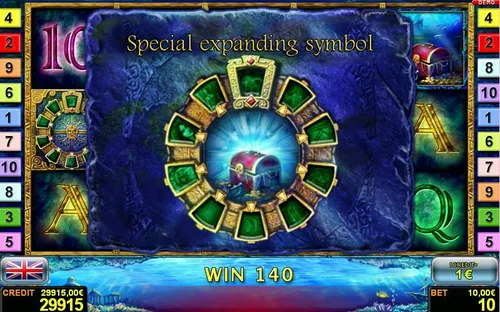
Bankroll rules that hold up
A sustainable bankroll for Lord of the Ocean must account for its high volatility, meaning sessions will experience long dry spells between significant wins despite the 95.10% theoretical return. Setting aside 100 times the maximum bet of 100 € creates a buffer of 10,000 €, which helps withstand the natural variance inherent in Novomatic’s design philosophy. This approach prevents early ruin during downswings, allowing the math to work over hundreds of spins rather than just a few dozen.
Flat betting remains the most effective strategy for maintaining stability, as progressive staking methods merely accelerate the depletion of funds without changing the built-in house edge. Betting the minimum 0.10 € per spin extends playtime significantly, enabling more opportunities to trigger the ancient Greek-themed free spins bonus round. This method contrasts sharply with aggressive systems used in other slots, where increasing stakes after losses leads to rapid bankruptcy due to the fixed RTP.
The welcome bonus of 300% up to 2,000 € plus 100 free spins can supplement a dedicated bankroll, provided the wagering requirements are met through careful stake management. Applying the bonus funds to low-variance spins helps clear turnover requirements while preserving the original deposit for longer sessions on mobile devices. This hybrid approach balances risk and reward, ensuring that the 4.90% house edge does not erase the initial capital too quickly during gameplay.
Bet sizing against volatility
High volatility in Lord of the Ocean dictates that larger bets yield more dramatic swings, with potential payouts reaching up to 5,000x the stake during optimal symbol alignments. A bet of 10 € per spin exposes the player to greater risk per round compared to the 0.10 € minimum, directly impacting the speed of bankroll erosion. This dynamic requires mobile users to adjust their stake based on current balance, avoiding fixed amounts that might deplete funds before hitting the expanding wild feature.
The 10-line reel layout ensures that every spin evaluates ten specific combinations, making bet sizing critical for managing exposure to random outcomes across the five reels. Betting 1 € per line results in a 10 € total cost, which aligns with mid-range volatility strategies that seek to balance frequency and magnitude of wins. This middle-ground approach is preferable for players who prefer steady engagement over the erratic patterns seen in high-risk titles like Alles Spitze by Merkur.
Mobile play introduces touch-interface friction that can lead to accidental over-betting if stakes are not adjusted manually between sessions, unlike auto-play features on desktop. Players should regularly review their bet levels, ensuring they remain within the 0.10 € to 100 € range that matches their current bankroll status. Consistent adherence to these limits prevents emotional decisions during losing streaks, preserving capital for future attempts to trigger the lucrative free spins bonus.
Session limits worth setting
Setting a time limit for Lord of the Ocean sessions helps mitigate the psychological impact of high volatility, where long periods of no wins can distort perception of progress. Limiting play to two hours reduces exposure to the 4.90% house edge, theoretically preserving more of the initial bankroll compared to extended marathons on mobile devices. This discipline complements the game’s 95.10% RTP by preventing fatigue-induced errors in judgment during critical moments like triggering the gamble feature.
Loss limits should be calculated as a percentage of the total bankroll, typically around 20%, to ensure that sessions end before financial distress sets in during volatile stretches. For a 500 € bankroll, a 100 € loss limit means stopping play once that threshold is reached, regardless of recent near-misses or empty spins on the five reels. This rule enforces rational behavior, contrasting with the temptation to chase losses using progressive staking methods that ignore the fixed odds of Novomatic’s software.
Win goals provide a clear exit strategy, such as stopping after achieving a 50% increase in the starting bankroll, which locks in profits before variance erodes them. Given the 5,000x max win potential, even modest multipliers can significantly boost funds, making disciplined cash-outs essential for long-term sustainability on mobile platforms. This approach transforms abstract statistics into concrete financial boundaries, ensuring that the theoretical return translates into actual retained value for the player.
Why chasing losses fails
Chasing losses in Lord of the Ocean is mathematically futile because the 95.10% RTP remains constant regardless of previous outcomes, meaning past deficits do not influence future spins. Increasing bets to recover lost funds accelerates the application of the 4.90% house edge, leading to faster depletion of the bankroll during inevitable downswings. This principle holds true on mobile devices, where quick tap interactions can facilitate impulsive betting decisions that defy logical financial planning.
The high volatility of the game exacerbates the danger of chasing, as extended periods without wins are statistically normal and do not indicate an impending payout correction. Attempting to force a win through larger stakes ignores the random number generator’s independence, a fact obscured by the engaging ancient Greek theme and expanding wild mechanics. Players often mistake variance for skill, believing that bigger bets will eventually trigger the 5,000x max win, but the probability remains unchanged per spin.
Progressive staking systems, which raise stakes after losses, fail to overcome the built-in house edge and only shorten the duration until total ruin occurs. This strategy is particularly risky on Lord of the Ocean, where the 10-payline structure and 5x3 reel layout create complex winning patterns that do not respond to bet size changes. Rational play involves accepting losses as part of the entertainment cost, rather than attempting to correct them through flawed mathematical assumptions about hot or cold streaks.
Lord of the Ocean: key facts
| Parameter | Value |
|---|---|
| Game | Lord of the Ocean |
| Studio | Novomatic (developed/operated via its digital division Greentube) |
| Released | 2008 |
| RTP | 95.10% |
| House edge | 4.90% |
| Volatility | high |
| Max win | 5,000x |
| Reels | 5x3 |
| Paylines / ways | 10 lines |
| Bet range | 0.10 – 100 |
Common systems and their limits
The Lord of the Ocean slot by Novomatic offers a fixed 10-line layout, which restricts betting flexibility compared to dynamic grid structures found in modern titles. This static reel configuration means players must adjust stake sizes rather than line counts to manage risk during high volatility sessions. Consequently, bankroll management relies heavily on per-spin cost control rather than strategic line selection. Players cannot alter the core mechanics to suit short-term variance needs.
Comparing the 95.10% RTP to Book of Dead reveals a distinct mathematical edge where the latter returns 96.21%. This 1.11 percentage point difference accumulates significantly over thousands of spins, affecting long-term profitability for mobile users. The lower theoretical return of Lord of the Ocean demands stricter budget discipline to offset the higher house edge effectively. Mobile players should account for this reduced efficiency when planning extended gaming sessions.
Gamble features allow doubling wins after standard payouts, but they introduce binary risk that can deplete funds rapidly. This optional mechanic operates independently of the base game’s 5,000x max win potential, creating separate risk profiles for different play styles. Users engaging with these side bets face immediate capital exposure without altering the underlying slot volatility. Such choices require precise timing and strict loss limits to remain viable within a controlled bankroll.
Flat betting explained
Lord of the Ocean permits stakes ranging from 0.10 to 100 per spin, enabling consistent wagering strategies across all sessions. Flat betting involves selecting a single amount within this range and maintaining it regardless of previous outcomes or balance fluctuations. This approach stabilizes variance impact, allowing the 95.10% RTP to manifest more predictably over extended play periods. Mobile users benefit from reduced decision fatigue when adhering to a predetermined stake level.
The 5x3 reel structure supports uniform bet sizing by keeping payline requirements constant for every active round. Unlike progressive systems, flat betting does not amplify losses during dry spells, preserving the initial bankroll longer. With a maximum win cap of 5,000x, steady wagers ensure that any significant payout remains proportional to the entry cost. This method aligns well with the high volatility nature of the Novomatic release by smoothing equity curves.
Book of Dead utilizes identical 5x3 dimensions but differs in thematic execution while sharing similar structural constraints for flat wagers. Both titles require consistent stake application to maximize the utility of their respective feature triggers like expanding wilds. Maintaining a fixed bet prevents emotional adjustments that often lead to rapid bankroll erosion during losing streaks. This discipline is crucial for mobile players seeking sustainable engagement with high-variance slots.
Progressive staking risks
Increasing stakes after losses, known as progressive staking, accelerates bankroll depletion despite not altering the inherent house edge of Lord of the Ocean. Raising bets following deficits forces larger exposures during negative variance periods, which contradicts prudent money management principles. Given the 4.90% house edge, such strategies mathematically guarantee eventual ruin unless stopped by external intervention. Mobile players often lack the screen real estate to monitor complex progression tables effectively.
The 10-line format of Novomatic’s title requires fixed multipliers for each win calculation, complicating dynamic bet adjustments based on recent results. Attempting to recover losses through escalated wagers increases the probability of hitting the table limit or exhausting funds before a reset. With a theoretical return of 95.10%, no betting system can overcome the statistical disadvantage built into the game mechanics. This reality underscores the danger of chasing wins in high-volatility environments.
Contrasting with Book of Dead, which also features high volatility, neither game rewards aggressive staking patterns due to independent spin outcomes. Each result remains random, meaning past losses provide no predictive value for future spins or bonus trigger probabilities. Escalating bets only compresses the time available to experience the full range of potential outcomes defined by the RTP. Responsible play necessitates rejecting recovery tactics in favor of sustainable, fixed-stake approaches.
What the maths actually allows
The 95.10% RTP indicates that Lord of the Ocean returns €95.10 for every €100 wagered over an infinite number of spins. This long-term average masks short-term deviations caused by the high volatility setting, which creates wide swings in session outcomes. Players should expect prolonged periods of zero returns interspersed with occasional large payouts up to the 5,000x maximum win cap. Understanding this distribution helps set realistic expectations for mobile gaming sessions.
High volatility combined with a 10-line structure means win frequency is low, requiring patience to hit the free spins bonus triggered by specific symbols. The expanding wild feature enhances payout potential but does not change the fundamental expectation value dictated by the 4.90% house edge. Bankroll size must accommodate these dry spells to survive until statistically probable bonuses occur during typical play. This mathematical reality limits the effectiveness of short-term strategy interventions.
Comparing the 5,000x max win of Lord of the Ocean to Book of Dead shows identical caps despite different thematic implementations. Both games distribute their top prizes rarely, making them unsuitable for players seeking frequent small wins through flat betting. The mathematical allowance for profit depends entirely on luck overcoming the built-in advantage held by the operator. Sustainable play requires accepting these constraints rather than attempting to manipulate them through betting adjustments.
Reading variance honestly
Lord of the Ocean exhibits high volatility, meaning win distributions are skewed toward rare, large payouts rather than consistent small returns. This characteristic demands a substantial bankroll relative to the minimum bet of 0.10 to withstand extended losing sequences common in such designs. The 95.10% RTP remains constant regardless of volatility, but its realization is delayed until sufficient spins accumulate to smooth the curve. Mobile players must prepare for significant equity dips during typical gameplay sessions.
The 10-line paytable structure influences how variance manifests, as wins depend on matching symbols across specific horizontal paths on the 5x3 grid. Expanding wilds increase payout magnitude but do not improve hit frequency, reinforcing the high-risk profile established by the developer. Gamble features offer temporary relief but introduce additional risk layers that compound the inherent variance of the base game. Honest assessment requires acknowledging that most spins will yield no return or minimal gains.
Book of Dead shares the high volatility trait, creating similar variance challenges for players navigating between feature triggers and base game spins. Both titles rely on random number generation to determine outcomes, ensuring that no pattern can reliably predict the next result. Reading variance honestly means accepting that short-term results deviate wildly from the 95.10% theoretical return without implying future correction. This perspective prevents flawed decisions driven by misconceptions about regression to the mean.
Learning the game in demo first
Lord of the Ocean is a 5x3 slot with 10 lines released by Novomatic in 2008. The absence of a cash-out button distinguishes it from crash games, requiring players to understand its expanding wild and free spins features before wagering real money. Testing these mechanics in demo mode allows users to observe how the high volatility impacts spin outcomes without financial risk.
The theoretical RTP stands at 95.10%, meaning the house edge is 4.90% over a very long run. This percentage indicates that for every 100 units wagered, the game returns approximately 95.10 units to players on average. Comparing this to Big Bass Splash's 96.71% RTP reveals a slightly higher cost per spin for Lord of the Ocean.
Understanding the paytable structure helps players recognize the value of matching symbols across the 10 active lines. The maximum win cap is set at 5,000x the stake, which requires significant luck to trigger during extended play sessions. Familiarity with these parameters ensures realistic expectations when transitioning from practice to actual gameplay.
Adjusting stakes to your budget
The bet range spans from 0.10 to 100 units per spin, offering flexibility for various bankroll sizes. A player with a limited budget might choose the minimum stake of 0.10 to extend their session duration significantly. This lower entry point allows for more spins, increasing the chances of triggering bonus features like free spins.
High volatility means wins are less frequent but potentially larger, affecting how quickly a bankroll depletes. Using flat betting ensures consistent exposure to the 4.90% house edge without accelerating losses through progressive staking strategies. Consistent stakes help maintain control over spending while navigating the unpredictable nature of high-variance slots.
Maximizing the potential payout involves understanding that the 5,000x max win is tied to the current stake level. Betting 1 unit could yield up to 5,000 units, whereas betting 100 units could theoretically reach 500,000 units. However, higher stakes also increase the rate of bankroll erosion during dry spells between big wins.
Recognising a bad session
A session becomes problematic when consecutive losses drain the allocated bankroll faster than anticipated due to high volatility. Since Lord of the Ocean has no cash-out mechanism, players cannot lock in profits once a winning streak begins unexpectedly. Recognizing early signs of depletion prevents emotional decision-making and further financial loss.
Comparing the 95.10% RTP to Big Bass Splash's 96.71% highlights why some sessions feel more expensive despite similar gameplay structures. The lower return rate of Lord of the Ocean contributes to a faster decline in funds over time if luck does not align. Players should monitor their remaining balance closely to identify when variance works against them.
The Gamble feature introduces additional risk by allowing players to double winnings or lose them entirely. Engaging in multiple gamble rounds after a small win can quickly reverse gains if subsequent choices fail. Identifying when to stop gambling rather than chasing losses preserves the integrity of the initial bankroll plan.
Stopping while ahead
Securing profits requires discipline because Lord of the Ocean lacks an automatic cash-out function for accumulated wins. Once a player reaches a predetermined profit target, such as doubling their initial deposit, they must manually cease playing. This action protects earned funds from being recaptured by the inherent 4.90% house edge over subsequent spins.
The expanding wild feature can lead to substantial payouts during free spins rounds, creating opportunities to walk away with gains. If a session yields near the maximum win cap of 5,000x the stake, continuing play risks losing those hard-earned results. Knowing when to exit ensures that positive outcomes remain intact rather than eroding into negative territory.
Contrasting Lord of the Ocean's fixed line structure with other titles emphasizes the importance of setting clear exit points. Without flexible betting adjustments mid-game, sticking to a pre-defined strategy helps manage expectations effectively. Exiting while ahead maintains financial stability and reinforces responsible gaming habits amidst high-volatility environments.
Responsible play in practice
Setting aside a specific amount of money designated as the bankroll establishes a firm boundary for total possible losses. Lord of the Ocean’s high volatility demands strict adherence to this limit since large swings occur frequently during play. Managing resources responsibly ensures that entertainment costs do not exceed affordable thresholds defined beforehand.
The 300% welcome bonus up to €2,000 plus 100 free spins offers extra value but comes with attached conditions. Understanding wagering requirements associated with bonuses prevents unintended overspending while attempting to meet playthrough targets. Players should evaluate whether utilizing promotional funds aligns with their overall budgeting strategy before accepting offers.
Avoiding progressive staking methods like raising stakes after losses is crucial since such tactics only shorten the time to ruin. Lord of the Ocean’s built-in mathematical advantage remains constant regardless of betting patterns employed by participants. Maintaining flat bets supports sustainable engagement with the game while minimizing exposure to unnecessary financial dangers.
DemoRTP & VolatilitySymbols & PayoutsBonus FeaturesStrategyBonusesMobileDownload & AppMax WinSimilar GamesReviewFAQSitemap
Lord of the ocean 2025